
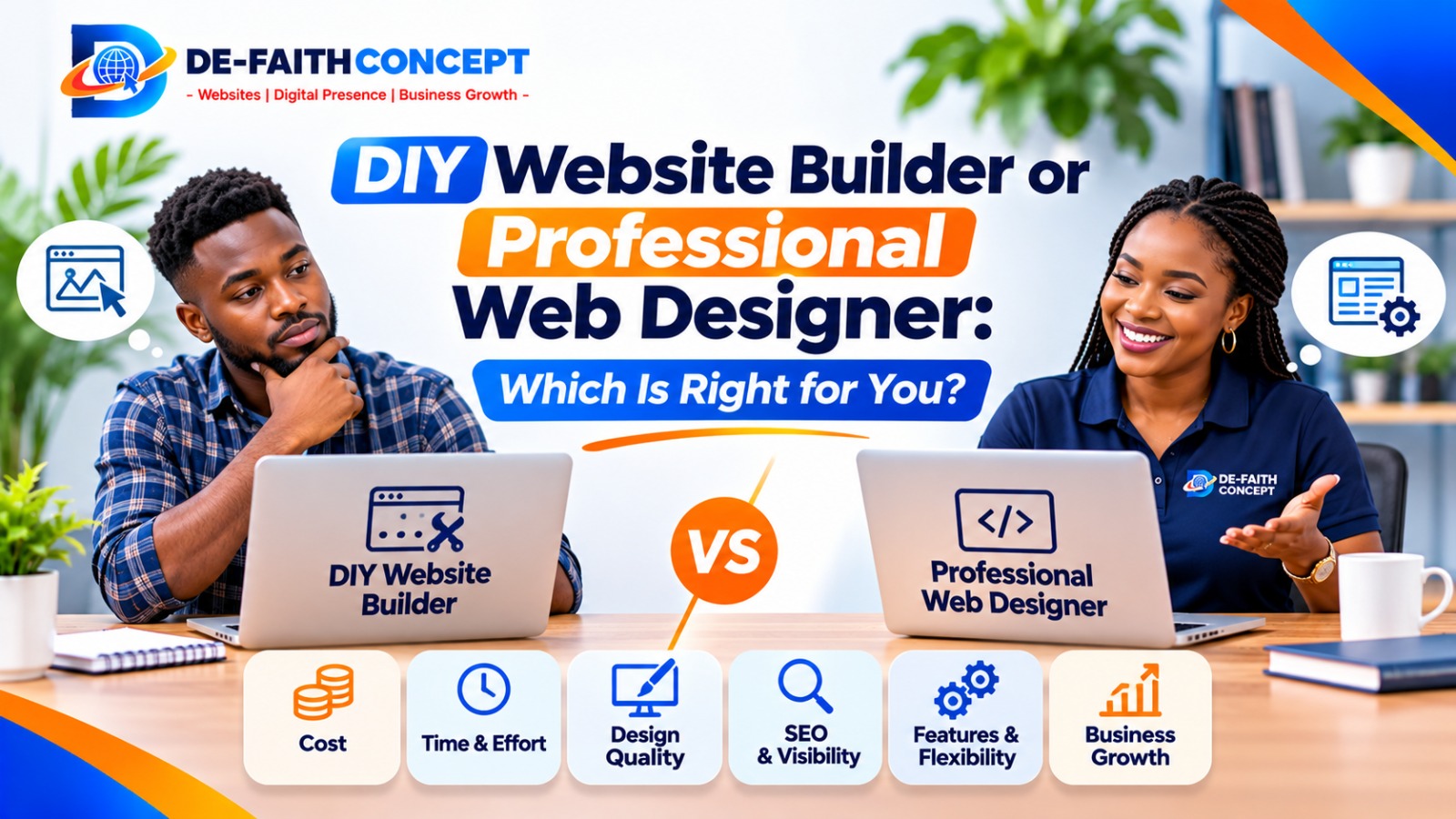
Starting a business website is an important step towards building your online presence. But before you begin, there is one decision you need to make: should you build the website yourself using a DIY website builder, or should you hire a professional web designer?
Both options have advantages. DIY website builders make it possible to create a website without advanced technical knowledge, while professional web designers can help businesses create more customised, strategic and functional websites.
The right choice depends on your budget, available time, technical experience, business goals and the type of website you need.
In this guide, we compare building your own website with hiring a professional web designer so you can decide which option makes the most sense for your business.
What Is a DIY Website Builder?
A DIY website builder is an online platform that allows you to create a website yourself without having to develop everything from scratch.
Most website builders provide ready-made templates, visual editing tools and features that allow you to add text, images, buttons, contact forms and other website elements.
Popular DIY website builders include:
- Wix.
- Squarespace.
- Shopify.
- Hostinger Website Builder.
- WordPress website-building tools.
These platforms are designed to make website creation more accessible to individuals and business owners who may not have web development experience.
Advantages of Building Your Own Website
There are several reasons why business owners choose the DIY approach.
1. Lower Initial Financial Commitment
Building your own website can reduce the amount you spend on professional design and development services.
Depending on the platform, you may only need to pay for a subscription, domain name and additional features.
This can be useful when you are starting a business and have a limited budget.
2. More Direct Control
You can make changes to your website whenever you want without having to contact a designer for every small update.
You can change text, upload images, update business information and publish new pages yourself.
3. No Need for Advanced Coding Skills
Most website builders use visual editors that allow you to arrange website elements without writing code.
This makes them accessible to people with little or no technical experience.
4. Useful for Simple Websites
If you only need a basic website to introduce your business, display a few services and provide contact information, a DIY builder may be sufficient.
5. Learn a Useful Skill
Building your own website can help you understand how websites work and how to manage basic online content.
Disadvantages of Building Your Own Website
Although the DIY approach sounds attractive, it also has limitations.
1. It Can Take More Time Than Expected
Building a website involves more than selecting a template and adding your business name.
You need to plan the pages, organise the content, choose images, create layouts, configure forms, check mobile displays and test everything before publishing.
If you have little experience, these tasks can take considerably longer than expected.
2. Limited Design Experience
A website builder may provide attractive templates, but creating a professional and consistent design still requires good design judgement.
Poor spacing, inconsistent fonts, weak colour combinations and confusing layouts can make a business appear less professional.
3. Technical and SEO Limitations
Website builders provide useful SEO features, but you still need to understand how to structure pages, write search-friendly content, optimise images and improve website performance.
A website can look attractive without being properly prepared for search engines.
4. Difficulties With Advanced Features
As your business grows, you may need features such as:
- Advanced booking systems.
- Customer dashboards.
- Custom forms and workflows.
- Payment integrations.
- Membership functionality.
- Specialised business tools.
Some website builders may not support your requirements easily, or you may need additional paid apps and services.
5. You Are Responsible for Quality Control
You need to check that the website works properly across different devices and browsers.
You must also make sure that contact forms work, links are correct, pages load properly and visitors can find the information they need.
What Is a Professional Web Designer?
A professional web designer is someone who plans and creates websites based on a client’s business goals, target audience, brand identity and functional requirements.
Depending on the project, a professional may also handle website development, content structure, mobile responsiveness, SEO foundations, integrations and website testing.
Instead of simply selecting a template, a professional web designer considers how the website should look, function and guide visitors towards taking action.
A professional website project may include:
- Business and audience research.
- Website planning and structure.
- Custom or customised website design.
- Mobile-responsive layouts.
- Website development.
- Contact forms and enquiry features.
- Basic SEO setup.
- Website performance optimisation.
- Security configuration.
- Testing and launch support.
The exact deliverables depend on the agreement between the business owner and the web designer.
Advantages of Hiring a Professional Web Designer
1. A More Professional Business Image
Your website often creates the first impression potential customers have of your business.
A professionally designed website can help communicate your brand identity, organise your information and present your services more clearly.
This can make it easier for visitors to understand what you offer and why they should consider working with you.
2. A Website Designed Around Your Business Goals
A professional web designer can plan your website around what you want visitors to do.
For example, a consulting business may want visitors to book consultations, while an online store needs customers to browse products and complete purchases.
The website structure, content and calls to action can be designed to support these goals.
3. Better User Experience
Professional website design considers how visitors interact with your website.
This includes:
- Easy navigation.
- Clear page layouts.
- Readable text.
- Mobile-friendly design.
- Visible contact information.
- Appropriate calls to action.
- Consistent branding.
A good user experience makes it easier for potential customers to find information and contact your business.
4. Mobile Responsiveness
Many people access websites using smartphones and tablets.
A professional web designer can ensure that your website layouts, images, menus, forms and other elements work properly across different screen sizes.
Mobile responsiveness is important because visitors should not have to struggle to use your website on their devices.
5. SEO Foundations
A professional website can be structured with search engine visibility in mind.
Depending on the project scope, this may include:
- Search-friendly URLs.
- Page titles and meta descriptions.
- Proper heading structure.
- Image optimisation and descriptive alt text.
- XML sitemap configuration.
- Internal linking.
- Search Console setup.
- Performance considerations.
However, hiring a web designer does not guarantee first-page rankings on Google. Search visibility also depends on content quality, competition, technical performance and ongoing SEO work.
6. Access to Technical Expertise
A professional web designer can help you avoid common technical mistakes involving website setup, themes, plugins, integrations, forms and performance.
This can be especially useful when your website needs more than basic pages.
7. More Time to Focus on Your Business
Instead of spending hours learning website design tools and troubleshooting technical problems, you can focus on running your business.
You can also agree on who will handle updates, maintenance and future improvements after the website launches.
Disadvantages of Hiring a Professional Web Designer
Professional website design also comes with considerations.
Higher Initial Cost
Hiring a professional generally requires a larger initial investment than building a basic website yourself.
The price depends on the number of pages, functionality, design requirements and the experience of the provider.
You Need to Choose the Right Provider
Not every person offering website design services delivers the same quality.
You need to review portfolios, compare proposals and understand what is included before making a decision.
Changes May Require Additional Work
Some website changes may require the designer’s assistance, especially when they involve custom functionality or significant layout adjustments.
Before the project begins, clarify whether you will receive training and access to update the website yourself.
Project Timelines
A professional website requires planning, design, development, revisions and testing.
The timeline depends on the complexity of the project and how quickly the client provides content, feedback and approvals.
DIY Website Builder vs Professional Web Designer: Key Differences
Here is a direct comparison to help you understand the differences.
| Comparison | DIY Website Builder | Professional Web Designer |
| Initial investment | Usually lower | Usually higher |
| Time commitment | Your responsibility | Much of the work is handled for you |
| Design | Template-based or self-designed | Professionally planned and customised |
| Technical expertise | You learn and manage it | You can rely on professional expertise |
| SEO setup | Depends on your knowledge | Can be included in the project |
| Custom functionality | Depends on platform and apps | More options for tailored solutions |
| Maintenance | Mostly your responsibility | Can be arranged as a service |
| Business growth | Depends on platform capabilities | Can be planned into the website structure |
| Control | Direct editing control | Depends on access and project agreement |
Neither option is automatically right for every business. Your requirements should determine the decision.
How Much Does It Cost to Build Your Own Website vs Hiring a Professional?
Cost is one of the biggest reasons business owners consider building their own websites.
However, the initial price is only one part of the total investment.
DIY Website Costs
When building your own website, you may need to budget for:
- Website builder subscription.
- Domain registration.
- Business email.
- Premium templates or themes.
- Paid apps or plugins.
- Additional storage or features.
- Your own time spent building and managing the website.
Some platforms include hosting in their subscriptions, while others require separate arrangements.
Professional Website Design Costs
When hiring a professional web designer, the project may involve:
- Website planning and design.
- Development and configuration.
- Content organisation.
- Mobile responsiveness.
- Contact forms and integrations.
- SEO foundations.
- Testing and launch.
- Training and support, if included.
A professional quote should clearly explain which services are included and which expenses are separate.
The Hidden Cost of DIY Website Design
Your time has value.
Suppose you spend several weekends learning a website builder, designing pages, fixing layout problems and configuring features.
Even if you save money on professional design fees, you have still invested time that could have been used to serve customers, improve your products or grow your business.
This does not mean DIY is always a bad financial decision. It simply means you should consider both money and time when comparing the options.
When Should You Build Your Own Website?
Building your own website may be the right decision if:
You Are Just Starting Out
If you are testing a business idea and only need a simple online presence, a DIY website can help you get started.
Your Budget Is Very Limited
If you cannot currently afford professional website design, a simple DIY website may be a reasonable temporary solution.
You Have Enough Time
If you enjoy learning digital tools and have time to build and manage your website, the DIY approach may suit you.
Your Website Requirements Are Basic
If you only need a few pages containing business information, services and contact details, a website builder may provide everything you need.
You Are Comfortable Managing the Website
If you are willing to handle updates, content changes, troubleshooting and basic optimisation, you may find a DIY platform manageable.
When Should You Hire a Professional Web Designer?
Hiring a professional may be the better option if:
Your Business Depends on Online Enquiries
If your website is expected to generate leads, enquiries, consultations or sales, it deserves proper planning.
You Want a Strong Professional Image
Businesses competing for customers need a website that communicates credibility and makes their services easy to understand.
You Need Custom Features
If your website requires advanced forms, booking systems, payment integrations, customer accounts or other specialised functionality, professional help can save time and reduce implementation problems.
You Want to Focus on Running Your Business
If learning website design would distract you from important business responsibilities, outsourcing the work may be a better use of your time.
You Want a Website That Can Grow
A professional can help plan a website structure that supports additional pages, services, content and features as your business expands.
You Need Help With SEO and Website Structure
If you want your website to support a long-term search marketing strategy, professional planning can help establish a stronger foundation.
Can You Build a DIY Website and Hire a Professional Later?
Yes. You do not have to choose one approach forever.
Some businesses begin with a DIY website and later hire a professional when their requirements become more demanding.
For example, you may initially build a simple website to introduce your business. As the business grows, you may need:
- A more distinctive design.
- Better service pages.
- Improved website navigation.
- Stronger SEO foundations.
- Online payment functionality.
- Booking and enquiry systems.
- A better mobile experience.
At that point, a professional redesign or development project may be worthwhile.
However, if you already know that your website will be central to your business operations, it may be more efficient to plan it properly from the beginning.
How to Choose the Right Professional Web Designer
If you decide to hire a professional, do not choose based on price alone.
Consider the following questions before making your decision.
1. Can I See Your Previous Projects?
Review the designer’s portfolio to understand the quality and variety of their work.
2. Have You Worked With Businesses Like Mine?
Industry experience can be useful, especially if your website requires specialised functionality.
3. What Is Included in the Package?
Ask about the number of pages, design, development, content, SEO, integrations and launch support.
4. Will My Website Work on Mobile Devices?
Mobile responsiveness should be part of the website requirements.
5. Will I Be Able to Edit My Website?
Confirm that you will receive the necessary access and guidance to update your content.
6. Who Owns the Website and Domain?
Make sure ownership, account access and transfer arrangements are clearly stated.
7. Is Maintenance Included?
Find out whether updates, backups, security checks and technical support are part of the agreement or charged separately.
8. What Is the Project Timeline?
Ask for a realistic schedule and understand what you need to provide to keep the project moving.
A reliable web designer should be able to explain the process, set realistic expectations and provide a clear project scope.
Common Mistakes to Avoid When Building or Hiring for a Website
Whether you choose DIY or professional website design, avoid these mistakes.
Choosing Design Over Functionality
An attractive website is important, but visitors must also be able to navigate it, understand your services and contact you easily.
Ignoring Mobile Users
A website that works only on desktop computers can create a poor experience for visitors using smartphones.
Forgetting SEO
Your website should have a clear structure, useful content and appropriate search optimisation from the beginning.
Using Poor-Quality Content
Unclear service descriptions, spelling mistakes and irrelevant images can reduce trust.
Ignoring Website Security and Maintenance
Your website needs appropriate security measures, backups and regular maintenance.
Failing to Plan for Growth
Think about the features your business may need in the future before choosing a platform or development approach.
Final Verdict: DIY Website Builder or Professional Web Designer?
So, which option is right for you?
Choose a DIY website builder if you have a limited budget, need a simple website, enjoy learning digital tools and have enough time to manage the project yourself.
Choose a professional web designer if you want a customised business website, need specialised functionality, value professional guidance or want to focus your time on running your business.
For businesses that depend on their websites to attract customers, generate enquiries and support long-term growth, professional website design can be a worthwhile investment.
The goal is not simply to get a website online. It is to create a useful online platform that represents your business, builds trust and makes it easier for potential customers to work with you.
Frequently Asked Questions
Is it cheaper to build your own website?
Building your own website can reduce initial design costs. However, you still need to consider subscriptions, domains, hosting where applicable, additional tools and the time required to create and manage it.
Is hiring a professional web designer worth it?
It can be worthwhile if your business needs a professional online presence, customised functionality, a better user experience or a website designed to support customer enquiries and growth.
Can I build a professional website without coding?
Yes. Modern website builders and content management systems allow people to create websites without writing code. However, creating a professional result still requires planning, good design decisions and proper setup.
How long does it take to build a business website?
The timeline depends on the number of pages, design requirements, functionality and how quickly content and feedback are provided. A simple DIY website may be launched relatively quickly, while a professional project may require several weeks or longer.
Can a DIY website rank on Google?
Yes. A DIY website can appear in Google search results if it has useful content, a clear structure, good performance and appropriate SEO. No website platform guarantees rankings.
Should a small business hire a web designer?
A small business should consider hiring a professional if its website is important for attracting customers, building credibility, generating enquiries or supporting online sales. A DIY website may be sufficient for businesses with very simple requirements.
Can I hire a web designer from another country?
Yes. Businesses can work with professional web designers remotely. Before starting, agree on the project scope, communication arrangements, payment terms, ownership and post-launch support.
Ready to Build a Website That Works for Your Business?
Whether you are starting a new business or improving your existing online presence, choosing the right website solution can make a difference.
At De-Faith Concept, we help businesses build professional websites designed around their goals, services and customers.
Our website design and development solutions can help you establish a stronger online presence, present your business professionally and create opportunities for customer enquiries.
Explore our website design services or view our previous projects.
Ready to discuss your website?
Contact De-Faith Concept to discuss your business requirements and find a suitable website solution.